
Los verbos irregulares en inglés son aquellos que cambian su forma en pasado simple y/o participio pasado sin seguir la terminación regular en -ed. A continuación encontrarás una tabla de verbos irregulares en inglés con sus tres formas principales (infinitivo, pasado y participio), su traducción al español y ejemplos para saber cuándo utilizar cada una.
Aunque existen más de 200 verbos irregulares registrados, dominar los más frecuentes te permitirá comprender y comunicarte en la mayoría de situaciones cotidianas.
👉 ¡Superprof te explica todo lo que hay que saber sobre la conjugación de los verbos en inglés!


Tabla de verbos irregulares en inglés
Aquí encontrarás una tabla verbos irregulares completa y ordenada alfabéticamente con los más utilizados en el día a día. Antes de presentarla, te contamos las formas verbales que puedes observar en ella:
- Infinitive / base form: la forma base del verbo.
- Pat simple: la forma para acciones terminadas en el pasado 🔙.
- Past participle: la forma usada con tiempos perfectos y voz 🗣️ pasiva.
- Traducción: el significado principal en español.
- Ejemplo breve: una oración que ilustra el uso de la forma en contexto.
- Audio: pronunciación de la oración de ejemplo para mejorar la comprensión auditiva 👂🏼.
| Infinitivo | Pasado simple 🔙 | Participio pasado 🔙🔙 | Traducción ❓ | Ejemplo breve ✅ | Audio 🗣️ |
|---|---|---|---|---|---|
| arise | arose | arisen | surgir / levantarse | A problem has arisen. | |
| be | was / were | been | ser / estar | She has been here before. | |
| bear | bore | borne / born | soportar / llevar | She has borne the pain. | |
| beat | beat | beaten | golpear / vencer | They have beaten the champion. | |
| become | became | become | llegar a ser | He became a doctor. | |
| begin | began | begun | empezar | The class began at 9. | |
| bend | bent | bent | doblar | He bent the metal bar. | |
| bet | bet | bet | apostar | I bet $10 on the game. | |
| bind | bound | bound | atar / vincular | They are bound by law. | |
| bite | bit | bitten | morder | The dog bit me. | |
| bleed | bled | bled | sangrar | His nose bled heavily. | |
| blow | blew | blown | soplar | The wind blew hard. | |
| break | broke | broken | romper | He has broken the glass. | |
| breed | bred | bred | criar | She breeds horses. | |
| bring | brought | brought | traer | She brought her sister. | |
| broadcast | broadcast | broadcast | transmitir | They broadcast the news. | |
| build | built | built | construir | They built a new house. | |
| burn | burnt / burned | burnt / burned | quemar | She burnt the toast. | |
| burst | burst | burst | estallar | The balloon burst. | |
| buy | bought | bought | comprar | We bought a new car. | |
| cast | cast | cast | lanzar / repartir | He cast the net. | |
| catch | caught | caught | atrapar | She caught the ball. | |
| choose | chose | chosen | elegir | I have chosen the red one. | |
| cling | clung | clung | aferrarse | The child clung to his mother. | |
| come | came | come | venir | They have come early. | |
| cost | cost | cost | costar | This shirt cost $20. | |
| creep | crept | crept | arrastrarse | The cat crept silently. | |
| cut | cut | cut | cortar | He cut the paper. | |
| deal | dealt | dealt | repartir / tratar | She dealt the cards. | |
| dig | dug | dug | cavar | They dug a hole. | |
| do | did | done | hacer | I have done my homework. | |
| draw | drew | drawn | dibujar | She drew a beautiful picture. | |
| dream | dreamt / dreamed | dreamt / dreamed | soñar | I dreamt about you. | |
| drink | drank | drunk | beber | We drank all the juice. | |
| drive | drove | driven | conducir | He drove to the beach. | |
| eat | ate | eaten | comer | They have eaten already. | |
| fall | fell | fallen | caer | The leaves have fallen. | |
| feed | fed | fed | alimentar | She fed the baby. | |
| feel | felt | felt | sentir | I felt happy yesterday. | |
| fight | fought | fought | pelear | They fought bravely. | |
| find | found | found | encontrar | Have you found your keys? | |
| flee | fled | fled | huir | The thief fled the scene. | |
| fly | flew | flown | volar | They flew to Paris. | |
| forbid | forbade | forbidden | prohibir | The law forbids it. | |
| forget | forgot | forgotten | olvidar | I forgot your name. | |
| forgive | forgave | forgiven | perdonar | She forgave him. | |
| freeze | froze | frozen | congelar | The water froze. | |
| get | got | got / gotten* | obtener | She got a new job. | |
| give | gave | given | dar | He has given me a gift. | |
| go | went | gone | ir | She went to London. | |
| grind | ground | ground | moler | She grinds coffee daily. | |
| grow | grew | grown | crecer | He has grown a lot. | |
| hang | hung | hung | colgar | We hung the picture. | |
| have | had | had | tener / haber | We had dinner at home. | |
| hear | heard | heard | oír | I heard a noise. | |
| hide | hid | hidden | esconder | The cat hid under the bed. | |
| hit | hit | hit | golpear | The ball hit the window. | |
| hold | held | held | sostener | She held my hand. | |
| hurt | hurt | hurt | lastimar | I hurt my knee. | |
| keep | kept | kept | mantener | They kept the secret. | |
| kneel | knelt | knelt | arrodillarse | She knelt to pray. | |
| know | knew | known | saber / conocer | I knew the answer. | |
| lay | laid | laid | colocar / poner | He laid the book down. | |
| lead | led | led | liderar / guiar | She led the team. | |
| lean | leant / leaned | leant / leaned | apoyarse | He leaned against the wall. | |
| leap | leapt / leaped | leapt / leaped | saltar | The cat leapt over the fence. | |
| learn | learnt / learned | learnt / learned | aprender | She learnt English. | |
| leave | left | left | dejar / salir | He left the room. | |
| lend | lent | lent | prestar | He lent me some money. | |
| let | let | let | dejar / permitir | Let me help you. | |
| light | lit | lit | encender | She lit the candle. | |
| lose | lost | lost | perder | We lost the game. | |
| make | made | made | hacer / fabricar | He made a mistake. | |
| mean | meant | meant | significar | What did you mean? | |
| meet | met | met | conocer / encontrar | We met in 2010. | |
| pay | paid | paid | pagar | She paid the bill. | |
| put | put | put | poner | Please put it on the table. | |
| read | read | read | leer | I read that book. | |
| ride | rode | ridden | montar | She rode a horse. | |
| ring | rang | rung | sonar / llamar | The phone rang twice. | |
| rise | rose | risen | elevarse / subir | The sun rises early. | |
| run | ran | run | correr | He ran fast. | |
| say | said | said | decir | She said hello. | |
| see | saw | seen | ver | Have you seen this film? | |
| seek | sought | sought | buscar | She sought help. | |
| sell | sold | sold | vender | They sold their house. | |
| send | sent | sent | enviar | We sent an email. | |
| set | set | set | colocar / establecer | She set the table. | |
| shake | shook | shaken | agitar / sacudir | He shook his head. | |
| shine | shone | shone | brillar | The sun shone brightly. | |
| shoot | shot | shot | disparar | He shot the ball. | |
| show | showed | shown / showed | mostrar | She showed me the way. | |
| shrink | shrank | shrunk | encogerse | The shirt shrank in the wash. | |
| sing | sang | sung | cantar | She sang beautifully. | |
| sink | sank | sunk | hundirse | The ship sank. | |
| sit | sat | sat | sentarse | We sat on the sofa. | |
| sleep | slept | slept | dormir | He slept until late. | |
| slide | slid | slid | deslizarse | The glass slid off the table. | |
| speak | spoke | spoken | hablar | We spoke about the project. | |
| spend | spent | spent | gastar / pasar | She spent a lot of money. | |
| spread | spread | spread | extender / difundir | The news spread quickly. | |
| stand | stood | stood | estar de pie | He stood at the door. | |
| steal | stole | stolen | robar | Someone stole my bike. | |
| stick | stuck | stuck | pegar / atascarse | The key stuck in the lock. | |
| sting | stung | stung | picar | A bee stung me. | |
| strike | struck | struck / stricken | golpear | The clock struck twelve. | |
| swear | swore | sworn | jurar | He swore to tell the truth. | |
| sweep | swept | swept | barrer | She swept the floor. | |
| swim | swam | swum | nadar | I swam in the lake. | |
| take | took | taken | tomar / llevar | They have taken the train. | |
| teach | taught | taught | enseñar | She taught English. | |
| tell | told | told | decir / contar | He told the truth. | |
| think | thought | thought | pensar | I thought about you. | |
| throw | threw | thrown | lanzar | She threw the ball. | |
| understand | understood | understood | entender | I understand the lesson. | |
| wake | woke | woken | despertar | I woke up late. | |
| wear | wore | worn | usar / llevar | She wore a red dress. | |
| win | won | won | ganar | We won the match. | |
| wind | wound | wound | enrollar / dar cuerda | She wound the clock. | |
| withdraw | withdrew | withdrawn | retirar | He withdrew money. | |
| wring | wrung | wrung | retorcer | She wrung the towel. | |
| write | wrote | written | escribir | She wrote an email. |
¿Cuántos verbos irregulares hay en inglés?
Una de las preguntas más frecuentes entre los estudiantes es si existe un número exacto de verbos irregulares. La respuesta no es tan fácil como parece, pues el idioma, como cualquier otro, está vivo y en constante evolución. Sin embargo, podemos ofrecer una guía clara:

verbos irregulares
Sin embargo, muchos de ellos son arcaicos o se usan muy raramente. Las listas generales de estudio suelen reunir entre 200 y 300 verbos irregulares y, para un nivel inicial o intermedio, aprender entre 50 y 100 de los más frecuentes ya aporta una base suficientemente sólida para la comunicación 💬 diaria.
Además, hay algunos verbos que tienen variantes dependiendo de si hablamos de inglés británico o estadounidense, como por ejemplo:
learned / learnt
dreamed / dreamt
got / gotten
🧑🏻🏫 Si quieres pillarlo más pronto que tarde, lo mejor es que contrates un profesor particular ingles que te ayude a acelerar tu aprendizaje.
Qué significan las tres formas de los verbos irregulares
Entender para qué sirve cada una de las tres formas es tan importante como conocer la lista en sí. A continuación, vamos a explicarte el uso de cada una de ellas.
Infinitivo o forma base
El infinitivo es la forma que aparece en el diccionario 📓. Se utiliza en varias situaciones clave:
- Después de «to»: I want to go (quiero ir).
- Con verbos modales: She can speak English (ella sabe hablar inglés).
- En presente simple, excepto en la tercera persona del singular: They work every day (ellos trabajan todos los días).
To be or not to be, that is the question.
Hamlet, de William Shakespeare.
Pero esta regla básica no es suficiente para obtener una buena puntuación en las pruebas de inglés TOEIC o TOEFL 📝, ya que muchos verbos irregulares no siguen este principio.
Pasado simple de los verbos irregulares
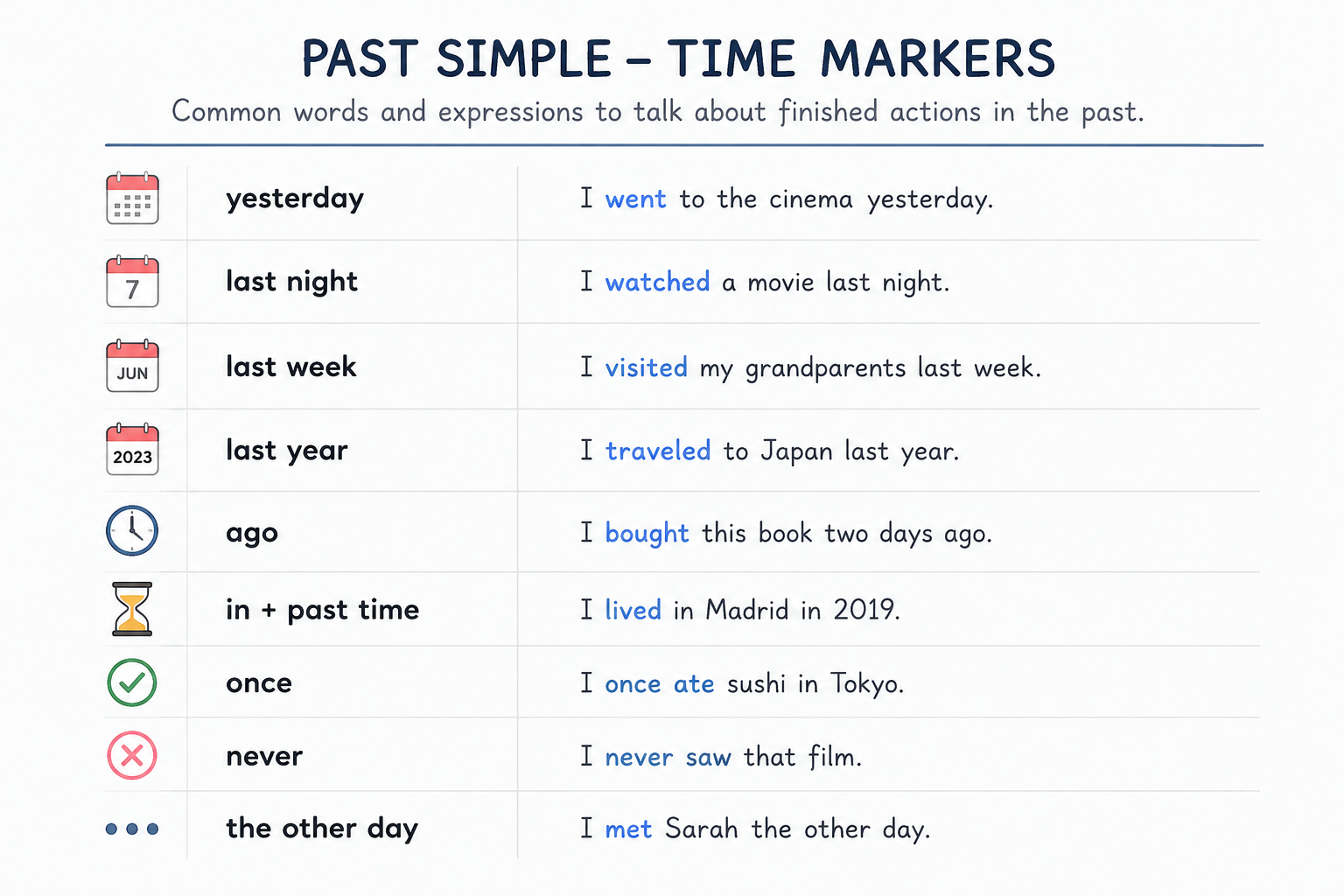
El pasado simple se utiliza para acciones que comenzaron y terminaron en un momento concreto del pasado. No importa si la acción fue hace un minuto o hace cien años, lo relevante es que ese período de tiempo ya ha terminado.
- I went to school yesterday
- She bought a new laptop last week
- They saw the match on Saturday
Participio pasado de los verbos irregulares
El participio pasado se utiliza principalmente en tres estructuras gramaticales y nunca va solo como verbo principal:
Diferencia entre pasado simple y participio pasado
Esta confusión es mucho más común de lo que crees. La siguiente tabla te ayudará a distinguirlos mejor a partir de ahora:
| Forma 📑 | Cuándo se usa 🤔 | Ejemplo ✅ |
|---|---|---|
| Pasado simple | Acción terminada en el pasado (con fecha concreta o implícita) | I went to Paris last year. |
| Participio pasado | Con have/has/had (tiempos perfectos) o en pasiva | I have gone to Paris before. |
⚠️ Para aprender a conjugar en inglés, primero hay que comprender la utilidad de los verbos irregulares y el pretérito.
Verbos irregulares por grupos: aprende patrones en lugar de listas aisladas
Memorizar la lista de verbos irregulares en inglés que te hemos dado antes puede ser abrumador. Por eso, una estrategia mucho más efectiva es la de agrupar los verbos por patrones ✅; no son reglas infalibles, pero te ayudarán a reconocer y recordar las formas más fácilmente.
Verbos con las tres formas iguales
Empezamos por el grupo más fácil: la forma base, el pasado y el participio pasado son idénticos:
Presente
cut
put
hurt
let
set
cost
Pasado simple
cut
put
hurt
let
set
cost
Participio pasado
cut
put
hurt
let
set
cost
🌐 ¿Te interesa saber también cuáles son las mejores páginas web para aprender la conjugación inglesa?
Verbos con pasado y participio iguales
Buenas noticias: la mayoría de los verbos irregulares pertenecen a este grupo. El pasado simple y el participio pasado comparten la misma forma:
Presente
buy
bring
think
teach
make
find
Pasado simple
bought
brought
thought
taught
made
found
Participio pasado
bought
brought
thought
taught
made
found
¿Por qué no les echas un ojo a los perfiles de los muchos profesores de clases de ingles online 💻 que hay cerca de ti en Superprof?
Verbos con infinitivo y participio iguales
En este grupo, como podrás intuir, el infinitivo y el participio pasado son iguales, pero el pasado simple es el que cambia:
Presente
come
become
run
Pasado simple
came
became
ran
Participio pasado
come
become
run
Los estudiantes que combinan al menos dos estrategias (agrupación por patrones + práctica con frases) retienen un 60 % más de verbos que aquellos que solo memorizan una lista verbos irregulares en inglés.
Verbos con tres formas diferentes
Algún desafío tiene que haber a la hora de aprender un idioma, y este será uno de los tuyos con el inglés: el grupo cuyas formas son todas distintas:
Presente
begin
drink
sing
write
speak
go
Pasado simple
began
drank
sang
wrote
spoke
went
Participio pasado
begun
drunk
sung
written
spoken
gone
Si inventas o creas un verbo hoy, su pasado siempre será regular.
Verbos con cambios de vocal frecuentes
Aunque no son reglas fijas, hay patrones de cambio vocálico que se repiten en varios verbos irregulares inglés y te pueden servir como guía, como por ejemplo:
- i ➡️a ➡️ u: sing - sang - sung; drink - drank - drunk
- ee ➡️e ➡️e: keep - kept - kept; sleep - slept - slept
- ow ➡️ew ➡️own: grow - grew - grown; know - knew - known
🏙️ Si vives cerca de la capital, hazles un favor a tus hijos y apúntales desde ya a clases de ingles para niños en Madrid. ¡Te lo agradecerán!
📚 Bibliografía
- Cambridge University Press. (s.f.). Irregular verbs. Cambridge Dictionary.
- Öztürk, T. P. (2024). The role of executive functions and working memory in the processing of regular and irregular verbs in L1 and L2 [Tesis doctoral, Sabancı University]. Sabancı University Research Database.
- Wagner, T. (2023). English interlanguage morphology: Irregular verbs in young Austrian EL2 learners—Psycholinguistic evidence and implications for the classroom. Palgrave Macmillan.
- Vovchuk, K. (2025). Methodological recommendations how to teach irregular verbs using rhyming groups. 4th International Online Conference 'Corpora and Discourse'.
Resumir con IA:
¿Te gustó este artículo? ¡Evalúalo!

 Cargando...